IPTV in the United States: A Complete Overview
How IPTV works in the United States, what it typically costs, what devices support it, and what the law actually says — one overview tying it together.
Content reviewed by the StreamingIPTV4K team
Quick Answer
Key Takeaways
- IPTV works the same underlying way in the US as anywhere else — it's the pricing, device landscape, and legal framework that have specifically US context.
- Cord-cutting away from traditional pay-TV has been a well-documented, sustained US trend for over a decade.
- US copyright law is federal, so IPTV legality doesn't vary by state.
- The devices most commonly used for IPTV in US households are widely supported: Fire TV Stick, Roku, Android TV/Google TV, Apple TV, and smart TVs.
- This overview links to deeper guides on each topic rather than duplicating them — use it as a starting point.
How IPTV Fits Into the US Streaming Landscape
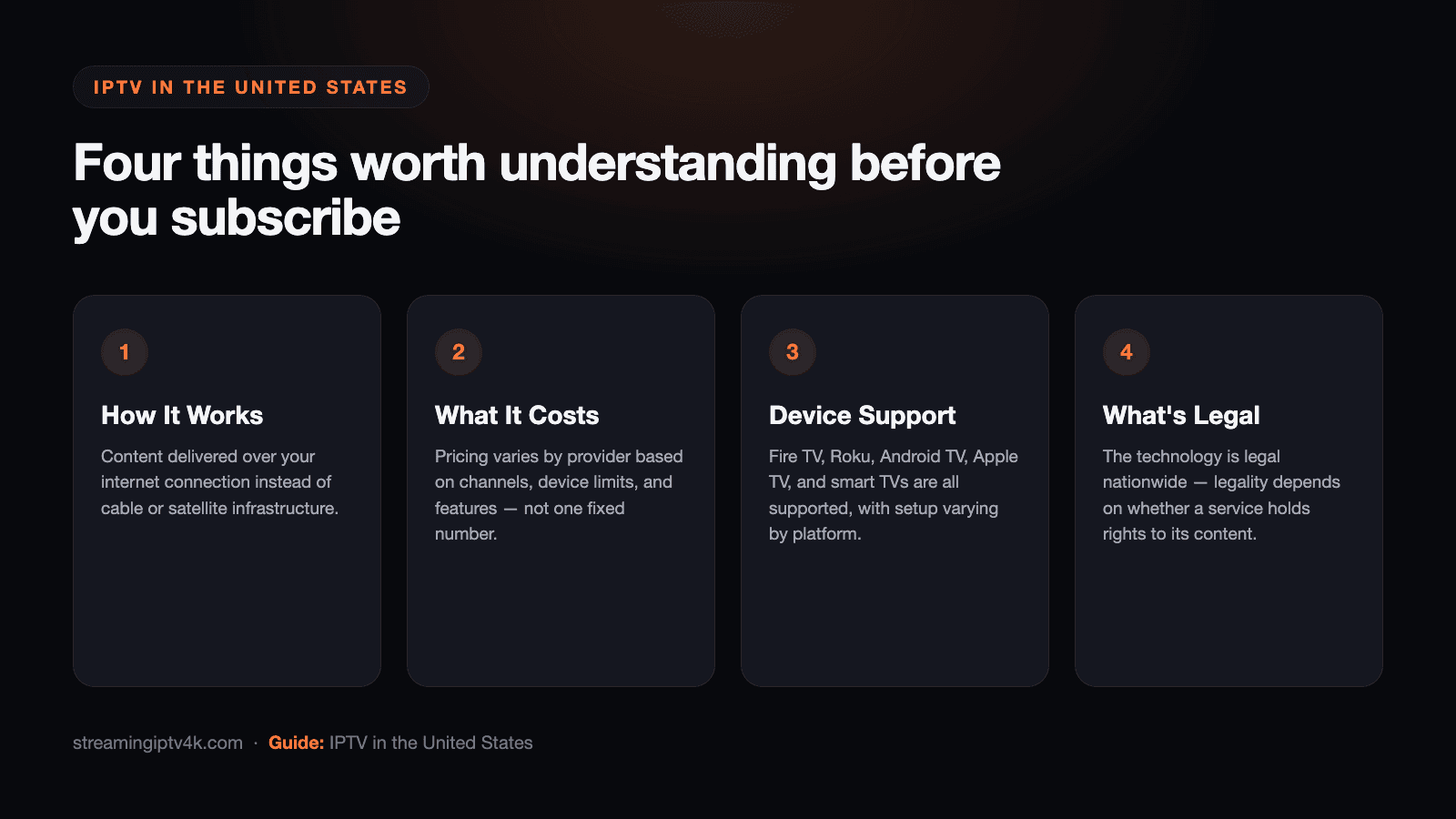
The shift away from traditional cable and satellite TV has been a well-documented, sustained trend in the United States for more than a decade, with research firms tracking a steady decline in pay-TV subscriptions alongside the rise of internet-delivered alternatives. IPTV is one part of that broader shift — it delivers live channels and on-demand content over the same internet connection already used for browsing and other streaming services, rather than through dedicated cable infrastructure or a satellite dish. For a full technical explanation of how this works, see our plain-English guide to what IPTV is.
What Does IPTV Cost in the USA?
IPTV pricing in the US varies significantly by provider, shaped by channel selection, device limits, video quality, and included features rather than a single market-wide number. Rather than quoting a figure that may not reflect a specific plan's actual inclusions, our dedicated guide to IPTV subscription cost breaks down exactly what drives pricing so you can evaluate any specific plan, including ours, on its own terms.
What Devices Work With IPTV in the US?
The devices most commonly used for streaming in US households — Fire TV Stick, Roku, Android TV and Google TV boxes, Apple TV, and smart TVs from Samsung and LG — are all supported by IPTV in some form, though the exact setup process and available player apps differ by platform. Our device pages cover compatibility notes for each platform, and our guide on how to watch IPTV on Roku covers that platform's distinct app-installation model specifically.
Is IPTV Legal in the United States?
IPTV technology itself is legal everywhere in the US — copyright law is federal, so this doesn't vary by state. Whether a specific IPTV service is operating legally depends on whether it holds the rights to distribute the content it offers, which varies by provider. Our dedicated guide on IPTV legality in the United States covers the full legal framework, including how federal enforcement actually works.
How to Evaluate an IPTV Service for a US Household
Beyond the general evaluation criteria covered in our guide to choosing an IPTV provider, a few things matter specifically for US households: confirming a provider's support for your timezone-sensitive live content like sports, checking device compatibility against what your household already owns rather than buying new hardware, and verifying the same legitimacy signals — identifiable business information, transparent pricing, clear terms — that matter for any online service.
Frequently Asked Questions
How does IPTV work in the United States?
The same way it works anywhere: content is delivered over an internet connection rather than cable or satellite infrastructure. See our full explainer on how IPTV works for the technical details.
Is IPTV popular in the US?
The shift away from traditional pay-TV toward internet-delivered alternatives, including IPTV, has been a well-documented, sustained trend in the US for over a decade.
What does IPTV cost in the USA?
It varies significantly by provider based on channel selection, device limits, and included features. See our IPTV subscription cost guide for the specific factors that drive pricing.
Is IPTV legal in the United States?
IPTV technology itself is legal nationwide, since US copyright law is federal rather than state-by-state. Whether a specific service is legal depends on whether it holds rights to its content.
What devices support IPTV in the US?
Most major streaming devices used in US households — Fire TV Stick, Roku, Android TV, Google TV, Apple TV, and smart TVs — support IPTV in some form, though setup varies by platform.
Related Guides
What Is IPTV?
Start with a plain-English overview of the technology.
Is IPTV Legal in the United States?
The full legal framework and enforcement landscape.
How to Find a Reliable IPTV Service
What drives IPTV pricing and how to spot legitimacy signals.
Explore Supported Devices
Compatibility notes for every major streaming device.
View Plans & Pricing
See current StreamingIPTV4K subscription plans.